 Objectives |
Solutions |
Problems |

| Objectives |
Solutions |
Problems |
 |
| There are only 5 small populations of grizzly bears remaining in the lower 48 states. |
The Idaho Fish and Game Department has been working for 15 years to quantify the population density, reproductive biology and causes of mortality of the grizzly bears that live in these mountains. But Idaho Fish & Game operations are funded almost exclusively with revenues from the sale of hunting and fishing licenses, and these are insufficient. The three officers running the Selkirk Grizzly Bear Project are thus critically short of funds and spread far too thin on the ground.
The project's research has shown that, in the past, the Selkirk population could not continue sustaining a rate of man-induced mortality that in some years constituted half of all Selkirk grizzly bear deaths, and was the main cause of this population's decline. However, since the project's inception, human-caused mortality in Idaho has dropped dramatically, offering hope for a full state-wide recovery of grizzly bears. The Selkirk ecosytem is one of the most complete grizzly bear habitats in the lower 48 states. The grizzlies will likely recover without bringing in bears from other populations -- if human caused deaths and habitat losses can be contained.
If the grizzlies can be saved, so too will the other endangered or threatened species, including caribou, wolves, and bull trout.
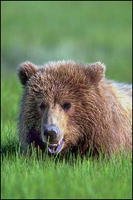 |
| Illegal shootings: The leading cause of grizzly deaths. |
Since 1983, biologists of the Idaho Department of Fish and Game have conducted baseline ecological research on the Selkirk grizzly bear population, introduced a bear conservation education program to the public and established a law enforcement program to protect grizzlies. Since 1983 more than 50 grizzly bears have been radio-collared, and monitored from the air and ground in the Selkirk range including North Idaho, Eastern Washington State and Southern British Columbia.
Factors contributing to human-caused mortality are illegal shootings, grizzlies mistakenly shot by black bear hunters, and loss of habitat.
1. Conservation Education: In 1989, a Conservation Education Officer was hired to educate people who live, work or recreate in grizzly bear habitat, and to patrol against poaching. More than 28,000 people have been contacted during field patrols, through presentations to civic groups, in schools, sportsmen's groups, and conservation organizations. The rate of man-caused mortality has declined since these education, research, and law enforcement programs began. They must be continued.
2. Continue Ecological Research: It is essential to continue the basic ecological monitoring of population trends, distribution, mortality factors, reproductive biology, and the impact of road closures and education on bear population densities.
3. Law Enforcement: The attitude of the public toward grizzly bears has improved somewhat as indicated by a slight decrease in illegal shootings. However, it is essential that anti-poaching patrols are continued in the entire area. Of the 50 bears collared for research, 20 have been killed by humans.
 |
| The grizzly bears of the Selkirk Mountains can recover if illegal shootings are controlled. |
In addition, the funds to continue research are lacking. Only seven grizzly bears are currently radio collared. Funds must be raised to finance bear trapping and collaring, air reconnaissance, and to purchase 4X4 vehicles or snowmobiles to allow monitoring the bears in this rugged mountain environment. Additional funding is needed for video surveillance equipment and computer equipment.
Mark and Delia Owens and the Owens Foundation are working to raise funds to help protect this fragile and important ecosystem and its remaining inhabitants. This is a magnificent, 'intact' ecosystem that must be conserved for future generations.
 |
| Efforts to recover the Selkirk grizzly bear population are federally mandated under the US Endangered Species Act. The Idaho Fish and Game Selkirk Grizzly Bear Recovery Project has been partly funded by federal revenues from Section 6 of that Act, partly from the sale of hunting and fishing licenses, with money from the private sector, including the timber industry, and from public foundations like our own. While the Owens Foundation endorses and promotes the primary mission of Idaho Fish and Game, that being 'to preserve, protect, perpetuate and manage...' wildlife resources, we do not in any way control the execution of the Selkirk Grizzly Bear Recovery Project. We acknowledge that state by state across our nation, wildlife management programs are largely funded by revenues from the sale of hunting and fishing licenses. However, we also recognize the critical need to generate additional funding from the public at large. In addition, while firmly endorsing the US Endangered Species Act, we also recognize the need for wildlife conservation to benefit the living standards of local people, so that they will recognize the value of wildlife and assist in its conservation. |
